Explore the Michelle Ostrove Blog

A skilled singer should have control over their vibrato. Vibrato is a slight variation in pitch, wavering back in forth on a note. It is used to add expression to the song you are singing. This will give you a richer tone in your voice while you are singing. There are speeds of pulsation fluctuation when singing with vibrato. Some people sing with a fast vibrato and narrow pulsation like Dolly Parton. This is caused by subglottic pressure (air pressure)…

A singer should master moving from one register to another smoothly without a break or shift in the voice. As you move up or down in your range it is important to transition with ease. For all voices, there is a point in which the shift from one register to another occurs. All singer’s voice breaks are located in different places. The shift from one register to another is called the passaggio. It is an Italian word which means passage.…
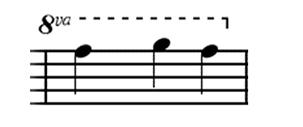
It is possible to expand your vocal range at any age. It doesn’t matter if you just started singing or if you’ve been singing for a decade. A singer can always work on extend their vocal range higher and lower. It feels different hitting higher notes verses lower notes. First, it is very important to use proper vocal technique, which means keeping your larynx in a rest position. You should never force your larynx up or down. Always sing with…

A good songwriting principle is that musical energy should built as a song progresses. If you listen to the start of a song, then skip ahead you will notice how the energy in the song builds as you move toward the chorus. There are three ways to build the energy in a song. Creating a more dynamic song that comes alive with an energy build is accomplished by singing the melody and harmonies, playing the piano (instrumentation), or the composition…

There are different reasons for throat tension when you sing. Throat tension can be an annoyance and hopefully it’s not on a regular basis. It’s important to relax your throat when you sing. The tension can develop because of incorrect body posture and the alignment of your vocal tract. Another cause is inadequate diaphragm and breath support. Lack of breath support will cause throat muscle strain and tension. Stage fright right before you begin to sing will also cause tension…

The foundation for a solid, thick sound for any voice register is possible. To have a strong vocal sound while singing in all registers you need to develop your mixed voice. All singers are working to create that sound in their singing. You will not create a power vocal sound without having balance in your upper register and lower register. In order to create that powerful mixed sound you must have a solid foundation. In order to create a solid…

Freestyling and improvising with notes are important skills for a singing or pianist. A good musical ear is crucial for creativity! Freestyling or improvising in music is like an actor saying what comes to mind instead of reading off a script, except with notes. It’s a freedom that can be scary and freeing at the same time. It is a fun and creative process for playing piano or singing. While improvising may seem scary, particularly if you feel you barely…

There are different types of rhythmic patterns for songs. A good rhythmic pattern is an essential element in every song. Singers and pianists need good rhythmic patterns when performing a song. You can mix together sounds from singers and instruments, but without a rhythmic pattern as the backbone for the song, it will falls flat. There are many rhythmic musical instrument and they are used to provide a strong beat to a piece of music. The bass guitarist (John Entwistle)…

What makes one singer stand out from the rest? The tone, enunciation, inflection of words and technique are a few reasons. Next time you listen to a song, notice how they sing the word “you.” How do you interpret the lyrics for a song? What do they mean to you? What feelings do the words awaken in you, and how can you evoke those feeling to the audience? Every successful singer has a distinct and recognizable sound. This has to…

To become the best singer or pianist you must practice. It is absolutely VITAL and the only way to take you to the next level. What you put into it is what you will get out of it. First thing to do is change your mind set about practice. Think of it as an exciting time to enrich your brain, expand your mind and enlighten you soul. The best musicians spend hours practicing. It isn’t rocket science nor is it…