Explore the Michelle Ostrove Blog

Rhythm is the most essential element in a song. You can mix together any sounds you want, but without a rhythmic backbone to the sound there is no music. A rhythmic musical instrument is used to provide a strong beat to a piece of music. The bass guitarist (John Entwistle) in “The Who” would play bass guitar as a lead guitar, which gave the band a unique and different sound. There are 5 types of Rhythmic Patterns in music and…

There are two very Important qualities the best singers, pianists (musicians) possess; these qualities are interrelated. What is the difference between a good singer or pianist and a great one? It’s never giving up, pushing through and perfecting the challenges in a song. The first quality is an excellent work ethic. Every singer and musician have encounter challenges in most songs. What separates the best from the rest is that they persevere through the challenge and they don’t give up.…

The voice box is also called the larynx which controls your breathing, swallowing and singing. The voice box is a tube-shaped organ in the neck. The voice box (larynx) controls and actually houses the vocal folds (cords). The larynx houses the vocal cords and that is why it is called the voice vox. When you sing, you want the air to flow freely through the voice box and not be restricted by muscles trying to close the airway. When you…

It’s important to develop the skill of matching individual notes with your voice. It takes time and practice to learn how to listen to yourself and make sure you are on the notes. If you’ve heard the expression “you are pitchy” that means you are not singing on the note, you could be under the note (flat) or above the note (sharp). Most people think that they have a terrible singing voice, but most likely it’s not the voice that…

1. An Artist has a distinct and recognizable sound. This has to do with their own unique vocal style and sound. A Singer molds his voice emulate another singer. 2. An Artist creates his or her own musical style, a sub-genre of his own. A Singer copies other artists and particular genres exactly as the Artist sang the song. 4. An Artist creates a brand that must be marketed and sold. He has a vision of what needs to be…

Do you want to work on creating your own sound when you sing? Many singers use inflections (sometimes called intonation) when they sing. Inflections give your voice a more distinctly different sound. It is related to a change in pitch or tone; the rise and fall of a singer’s pitch. Adding infections into your singing adds variety and it is used to emphasize what you are singing. If you spoke in the same monotone voice, at one pitch, your audience…

Vibrato is a musical effect from an instrument or a voice. It is a technique used to add expression to a piece of music. Vibrato is the rhythmic pulsation, vibration and/or bending a pitch (note). Vibrato can happen very naturally with a singer. If it doesn’t happen naturally, it can be a learned technique. There are 2 ways to hold a note, with vibrato or holding the note solid without vibrato. Very skilled and experienced singers will alternate between the…

Scientists have been researching how music impacts the brain for years. When you learn how to sing or play new songs on the piano (or any instrument) there are many benefits to the brain. The research has been exploring how music affects brain function, human behavior, reducing stress, reducing pain, helps symptoms of depression, cognitive skills, motor skills, spatial-temporal learning, and neurogenesis (brain produces neurons). For all of my science geeks, the results can be seen on an MRI, the…
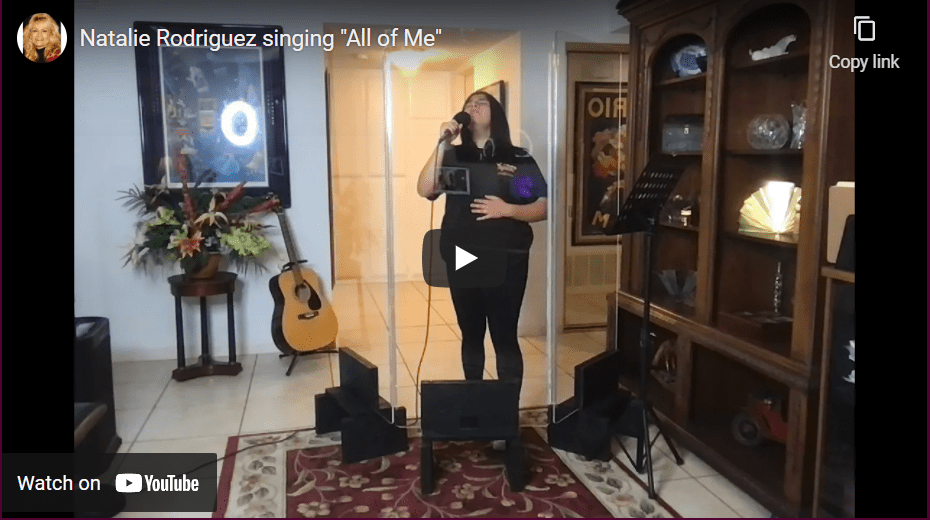
When you sing, if your vowel sounds are poor then everything else vocally will just sound mediocre. Articulation is when you sing your vowel sounds clearly and correctly; forming them into a well-crafted sound. It is also true for piano, playing the notes with articulation creates a clean and professional performance. The art of articulation is the formation of clear and distinct sounds, clarity in playing piano or singing successive notes. Have you every noticed how the British singers always…

Here are some tips on how to submit a demo to the record label and create the best chance of getting signed. Select the songs you’re the most proud of to send to the record company. Let your friends listen to the songs you’ve chosen and get their feedback. If you choose the tracks you love and they like them, the A&R Representative will ask to hear more of your songs. You will need to upload your chosen songs to…